
The Difference Between Borrowing And Stealing. It's Not What You Think.

Unless you’ve been living in a fallout shelter lo these many decades, you know the Cog commercial. A little metal gear taps a hubcap, the hubcap rolls into a tire, the tire bumps something else and something else and something else, and two minutes later, boom, there’s a car. No cuts. No trick photography. Just stuff, falling into other stuff, very politely, for two minutes, until it’s a Honda.
Everybody loved this commercial. Went bonkers over it. Won awards. A lot of them. People still talk about it. Which — fine, it’s a great spot. I’m not here to take that away from anybody. Least of all, Wieden+Kennedy. Arguably, the most creatively intelligent advertising agency of all time.
Except.
Turns out, in 1987, two Swiss guys built basically the same thing. A hundred feet of tires and ladders and oil drums, all tap-tap-tapping into each other, and they called it “The Way Things Go”. It was in MoMA. Sixteen years later, here comes Honda, doing the identical bit with a rolling tire. Wieden didn’t even deny it. They were like, “Yeah, okay, we copied that part.” Just admitted it. Like admitting to your wife you ate the last piece of cake and going right back to Netflix.
Nobody was mad that Honda made a chain-reaction commercial. Chain reactions aren’t owned by anybody. Every kid with a box of dominoes has made one. The problem was never about paying homage to the genius of Rube Goldberg who, let’s face it, was the prime mover where this whole crazy, magical, beautiful machines thing originated. Or maybe he wasn’t. Does anyone really know?
The problem was that these two Swiss guys had made one very specific, well-documented version. The problem was that Wieden and Honda had watched it forty times in a conference room, and nobody thought to say, “Hey, let’s get on the phone with those Swiss guys and tell them what we’re thinking”. That was it. That was the whole crime.
Not the borrowing.
The silence.
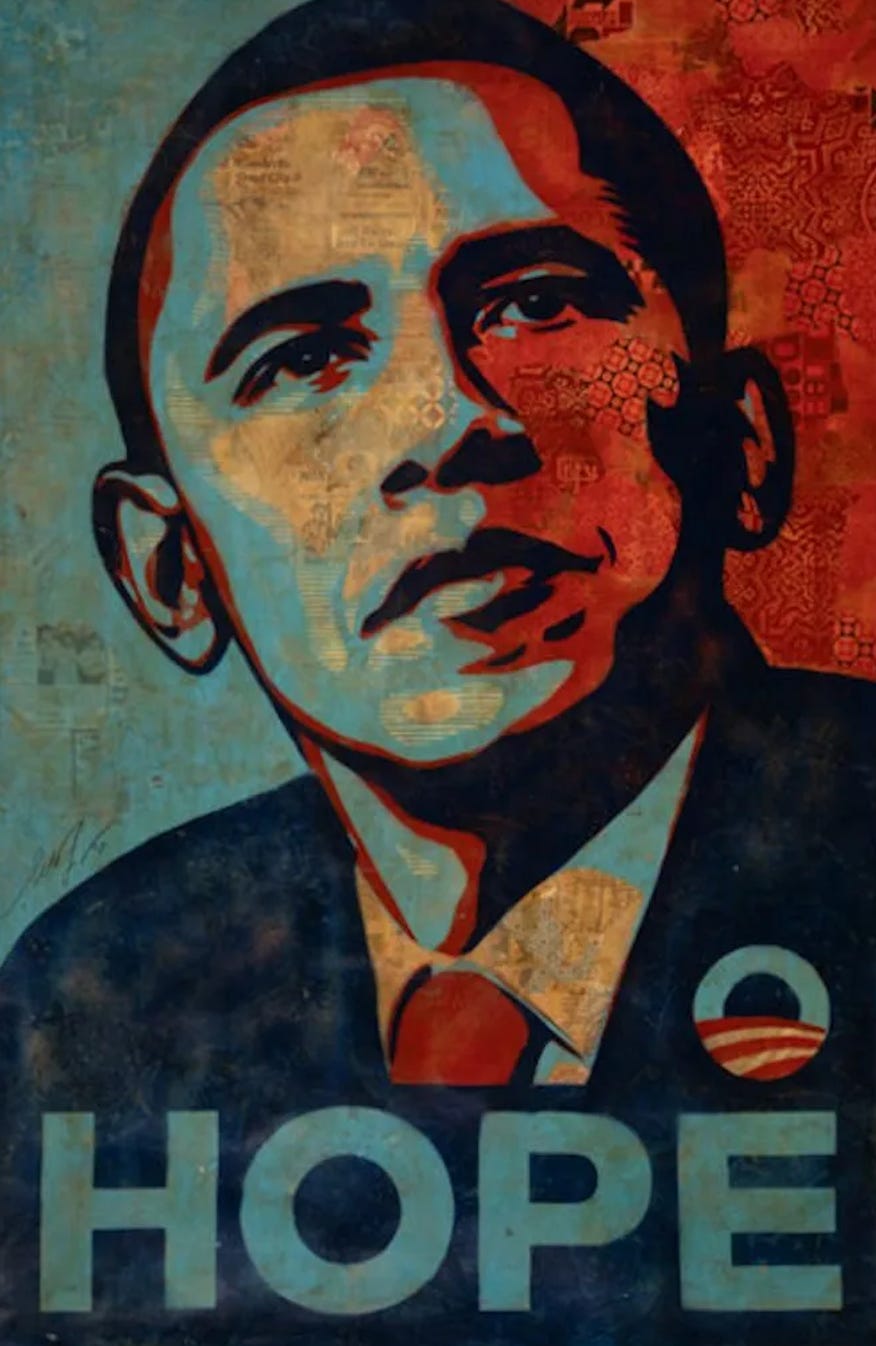
Shepard Fairey. The “HOPE” poster. Obama, red white and blue. Very iconic. Culture shifting. Fairey took an actual AP news photo that some photographer took, an unremarkable shot of Obama at a press event, and turned it into this poster that basically became the visual identity of a historic presidential campaign. Nothing wrong with that. If he’d just said “Yeah, I used this AP photo as a reference, here’s what I made of it,” I don’t think anybody’s picketing his house. Instead, he lied about which photo he even used. Said it was one picture, it was actually a different one. And then when people started poking around, he destroyed the evidence. This is a guy who had gobs of good will on his side, but instead he panics and starts shredding paper like he’s just been handed a subpoena. All he had to do was stand up and go, “Okay, yes, I lied, I’m sorry.”
Not that coming clean always works.
George Harrison, 1970, “My Sweet Lord.” First solo number one hit of his career. Big triumphant moment. Song’s about God. Everything’s going great. Then the company that owns a 1963 Chiffons song called “He’s So Fine” sues him, saying he flat-out lifted the melody. They play the two songs back to back in court and it’s not even close. It’s the same song wearing a different jacket.
Harrison doesn’t do the Fairey thing. Instead, he gets on the stand and just says, “Yeah, I heard “He’s So Fine” years before”. Well, of course he had, it was everywhere. As Harrison put it, “I wasn’t trying to copy it. I wasn’t sitting there with the record on, going, let’s take this part. It just... came out. And the judge sat there, listened to both songs, and goes, I believe you. I don’t think you did this on purpose. And then rules against George anyway! Even came up with a phrase for it right there on the spot. Subconscious plagiarism. Meaning, it doesn’t matter if you meant to, if it’s in your head and it comes out sounding like somebody else’s song, you still owe them something.
Harrison was just a guy who’d heard a song on the radio in 1963 and it apparently moved into his brain and redecorated without asking. He ends up paying to buy the rights to a song he was found guilty of subconsciously stealing.
None of these people got in trouble for borrowing someone else’s work. Everybody does this. Nobody makes anything from scratch. The chain reaction wasn’t the sin. The photo wasn’t the sin. The melody wasn’t even a sin. The Honda guys got caught and just said, yep, that’s us. Fairey got caught and set his own paperwork on fire trying to hide it. Harrison never lied about anything and still had to pay up.
Ideas have origin stories. Get caught hijacking them and sooner or later, you’ll probably regret it. Doesn’t matter who you are. Doesn't matter if you meant to or not. Somebody, somewhere, still has the original file.
And, of course, Picasso. But isn't that exactly why we, for ourselves and those we counsel, advocate voracious reading, and film-watching, and art-show going — all in pursuit of a richly populated subconscious that spits out the creative goods when it needs to.
No surprise, sometimes it not only skates close to the wind, but cuts a little too close to original pattern. And I bet the lawyers, virtually without exception, will say you can play it any of the three ways you mention above, and, regardless, wind up well and truly screwed.
That said, Ernie, I do believe in spontaneous co-invention, and not just Edison and Tesla. Long ago, for my newly formed SF agency, we did an ad that featured the tragically receding hairlines of moi, my partner, and our board chairman with the line "avoid the coming recession." Week or so after it ran in Adweek, got a red hot flame in the mail (that was then) with a clip from something virtually exactly alike created by none other than Nancy Rice.
I apologized in a letter to the editor, but still felt badly.
"Love and Theft"-Definitely Dylan's best album of this century. Probably one of his best ever.